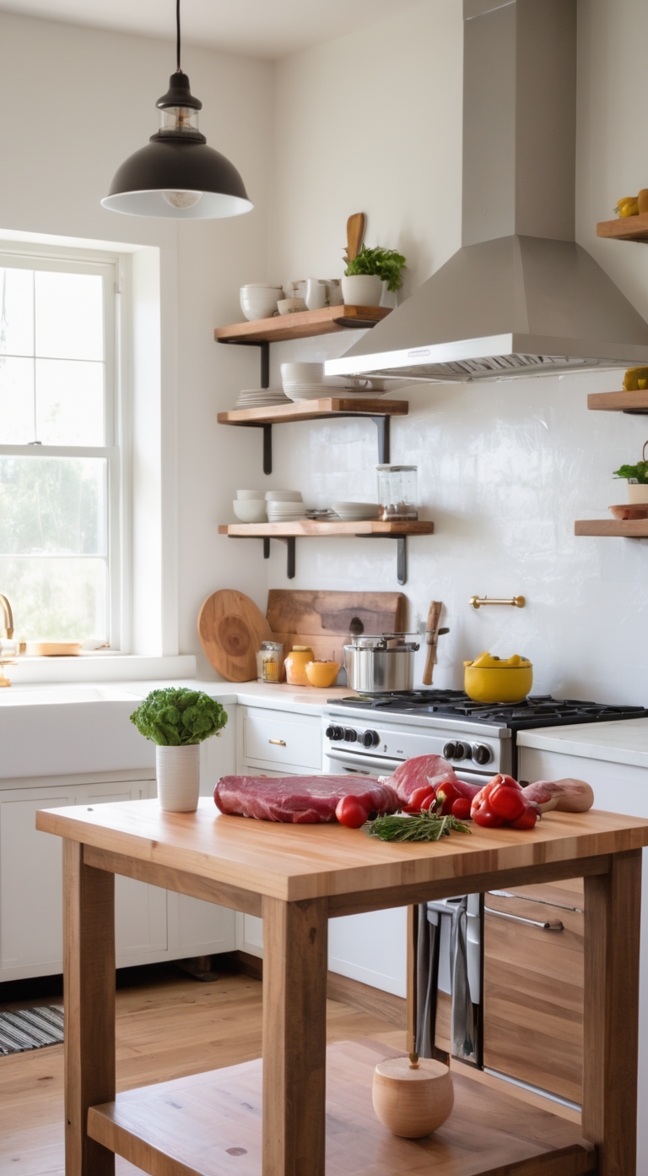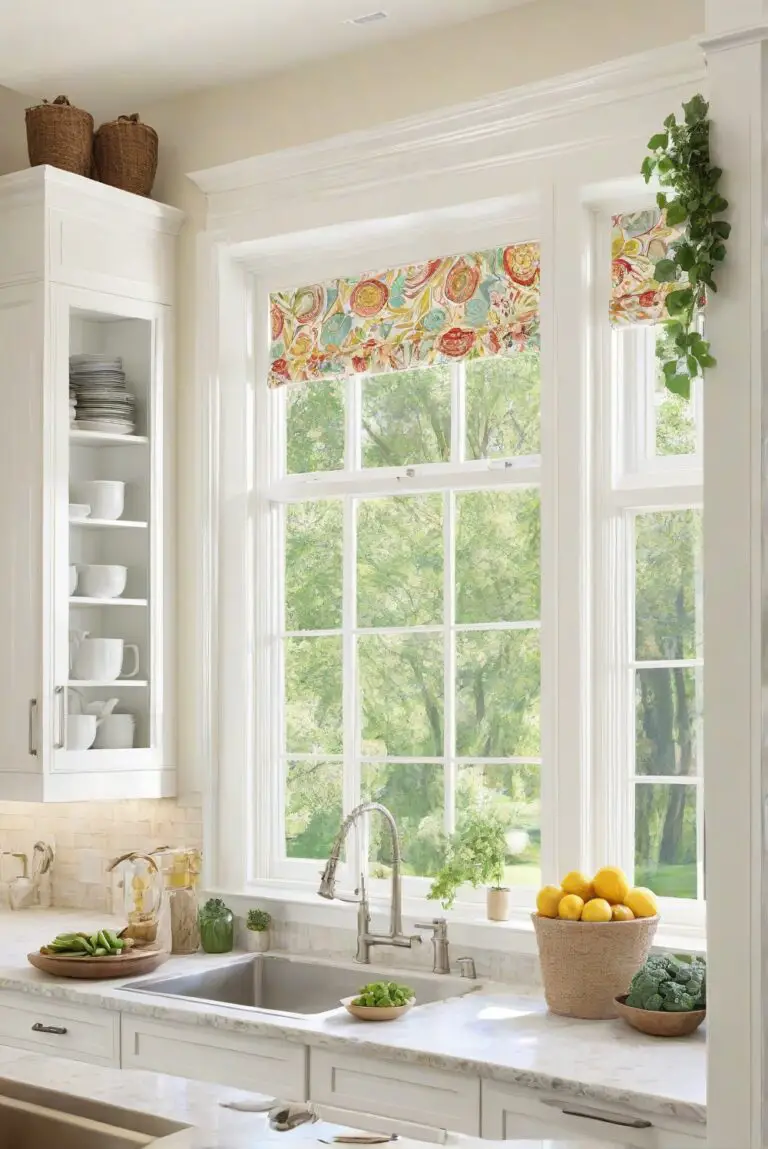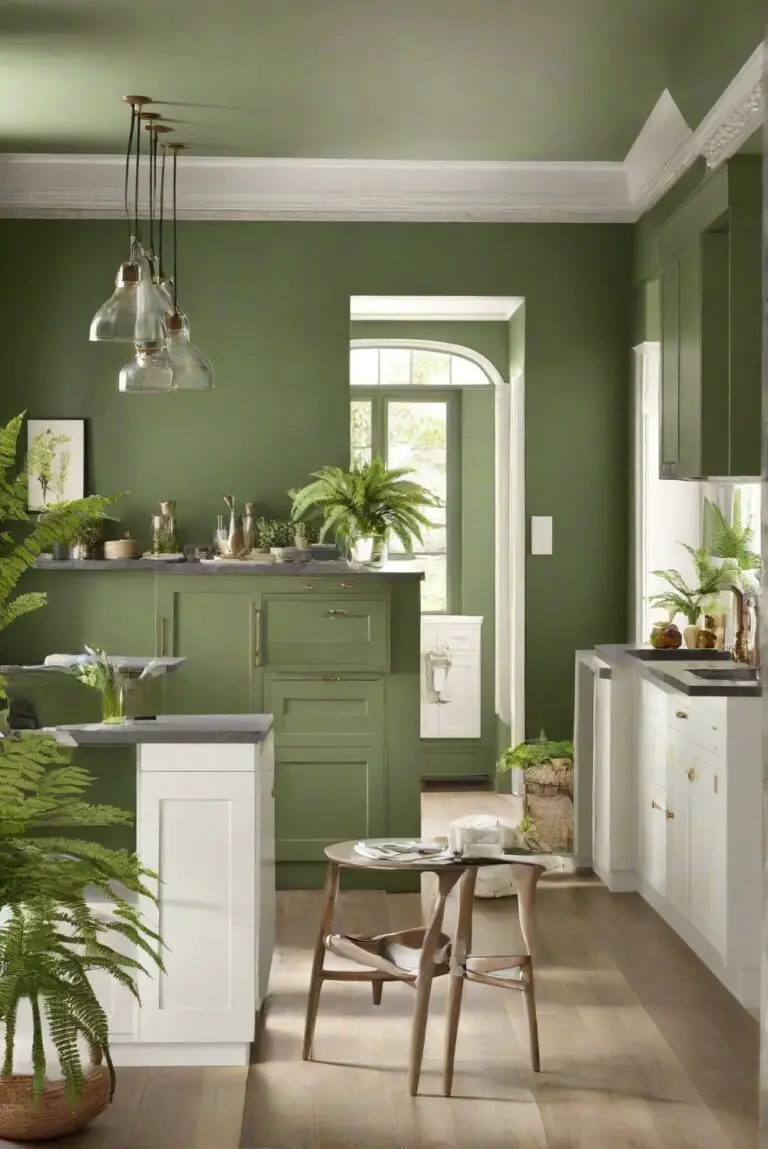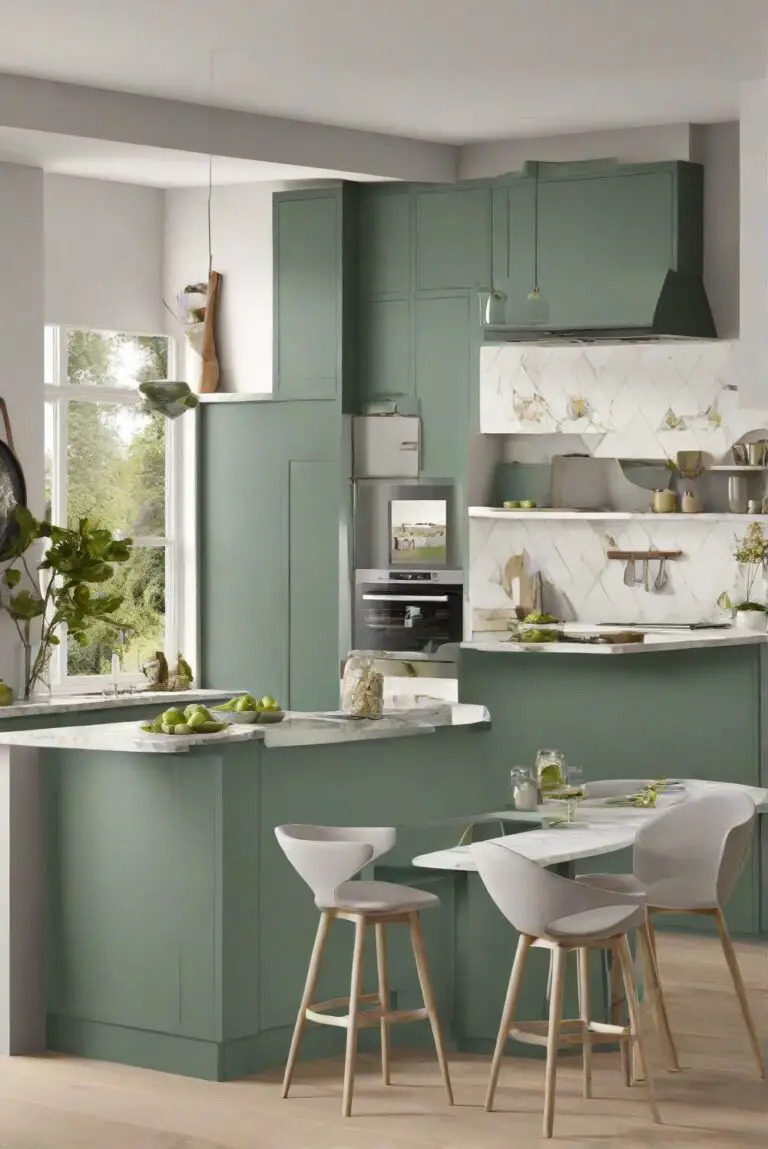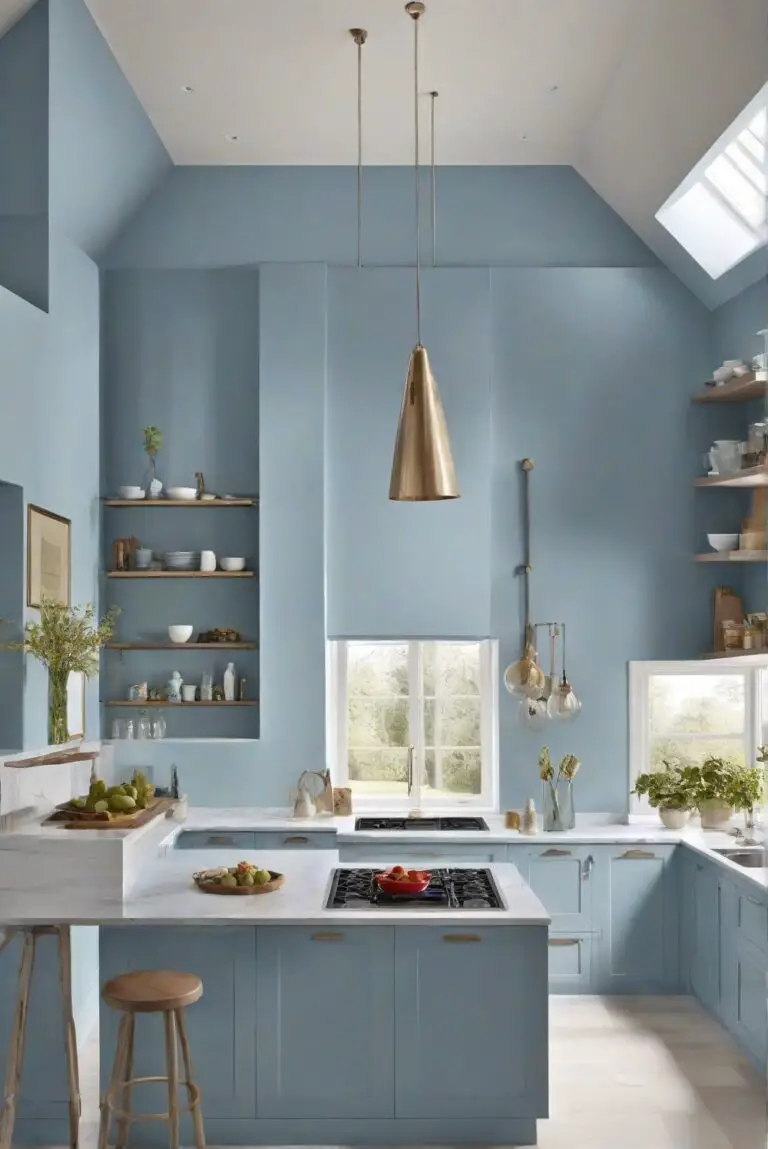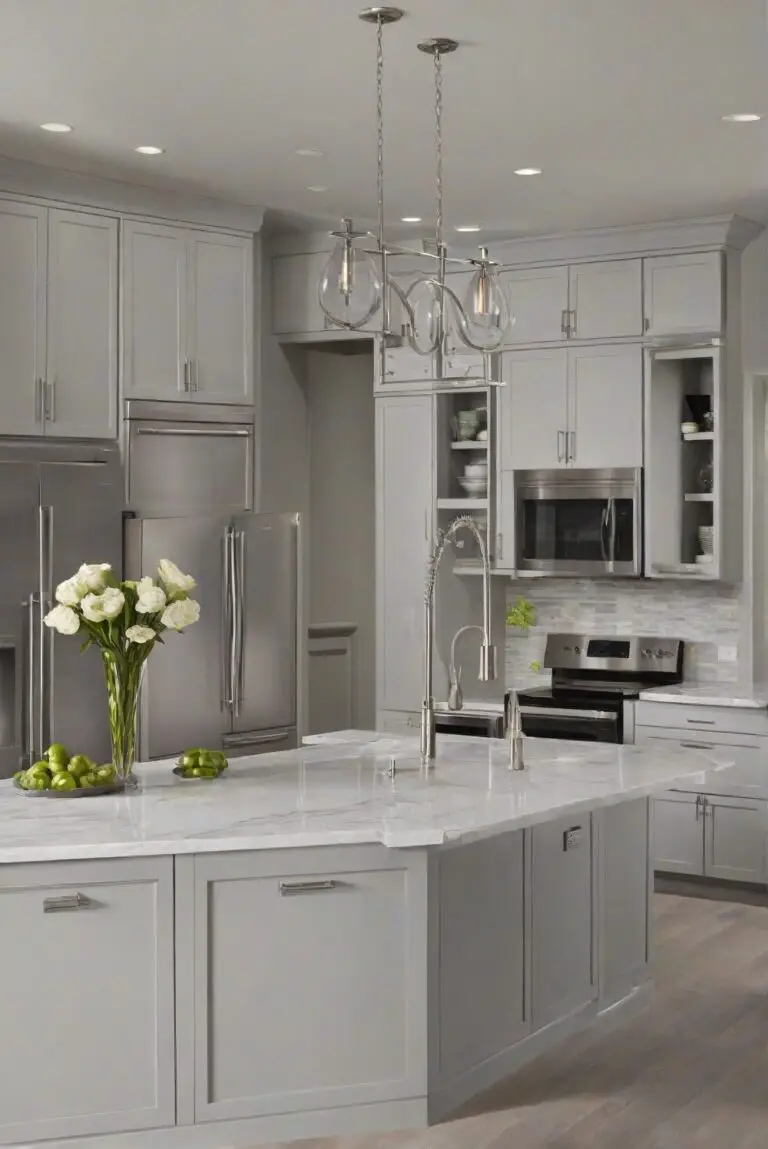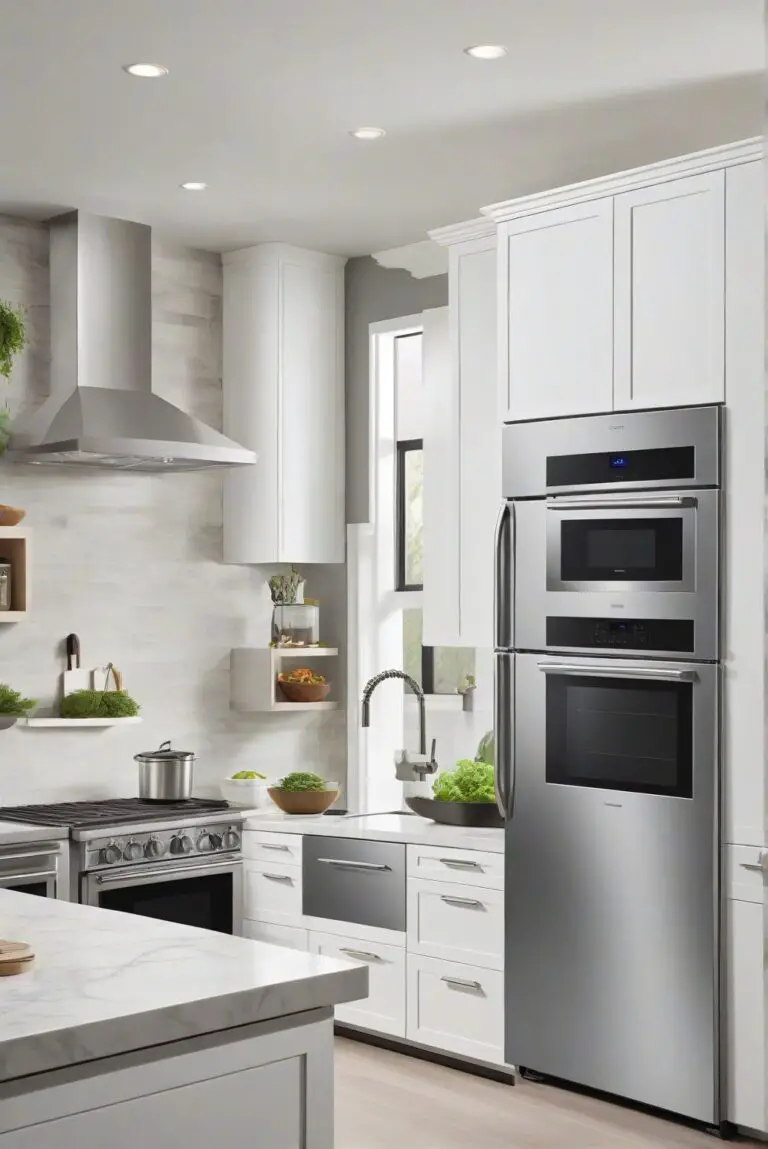
Follow along as I transform my butcher kitchen block into a rustic yet practical centerpiece.
Disclosure: This post contains affiliate links. We may earn a commission at no extra cost to you.

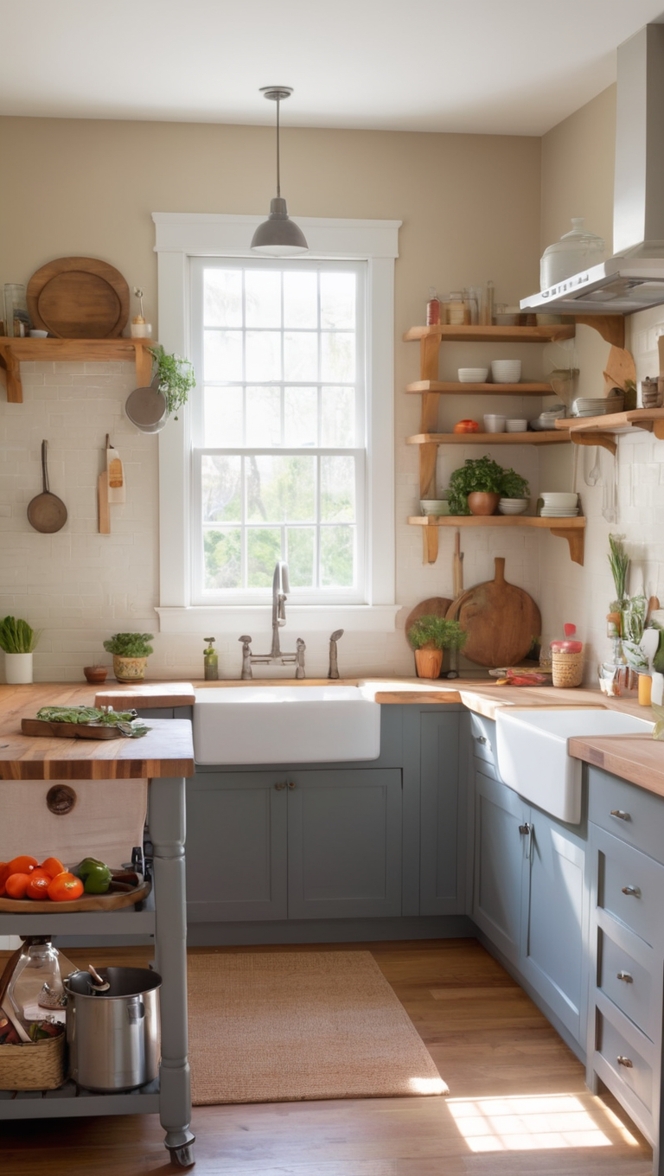
I styled my butcher kitchen block to be both rustic and practical by incorporating natural wood elements with modern functionality. I used a food-grade mineral oil to maintain the wood and prevent any bacteria buildup. To add a rustic touch, I placed woven baskets on the lower shelves for storage and added a few antique kitchen tools as decor. The practical aspect came from organizing my utensils in mason jars on the countertop for easy access. This combination creates a warm and inviting atmosphere while still being functional for my cooking needs.
How I Made My Butcher Kitchen Block?
1. What materials did you use to make your butcher kitchen block?
For my butcher kitchen block, I used high-quality solid wood, specifically maple, as it is known for its durability and resistance to moisture. I also incorporated stainless steel hardware for added strength and stability.
2. How long did it take you to complete the construction of the butcher kitchen block?
The construction of my butcher kitchen block took me approximately two weekends to complete. This timeframe included measuring, cutting, sanding, and assembling the various components.
3. Did you follow a specific blueprint or design, or did you create your own?
While I did refer to some online tutorials for inspiration, I ultimately designed my butcher kitchen block based on my kitchen layout and personal preferences. I customized the dimensions and features to suit my cooking needs.
4. How did you ensure the stability and durability of the butcher kitchen block?
To ensure the stability and durability of my butcher kitchen block, I reinforced the joints with wood glue and screws. I also applied a food-safe finish to protect the wood from moisture and stains, increasing its longevity.
5. What tools were essential in the construction process of the butcher kitchen block?
Essential tools for constructing my butcher kitchen block included a circular saw for cutting the wood, a power drill for assembling the pieces, a sander for smoothing the surfaces, and clamps for securing the components during assembly.
6. Did you face any challenges or setbacks while making the butcher kitchen block? If so, how did you overcome them?
One challenge I faced was aligning the butcher block surface perfectly with the base. To overcome this, I used spacers and a level to ensure evenness. Additionally, I sanded any rough edges to achieve a smooth finish.
7. How has the butcher kitchen block enhanced your cooking and kitchen experience?
Since incorporating the butcher kitchen block into my kitchen, I have noticed a significant improvement in my cooking experience. The ample workspace allows me to prep ingredients more efficiently, while the solid construction provides a stable surface for cutting and chopping. Overall, the butcher kitchen block has become a focal point in my kitchen and has enhanced both the functionality and aesthetics of the space.
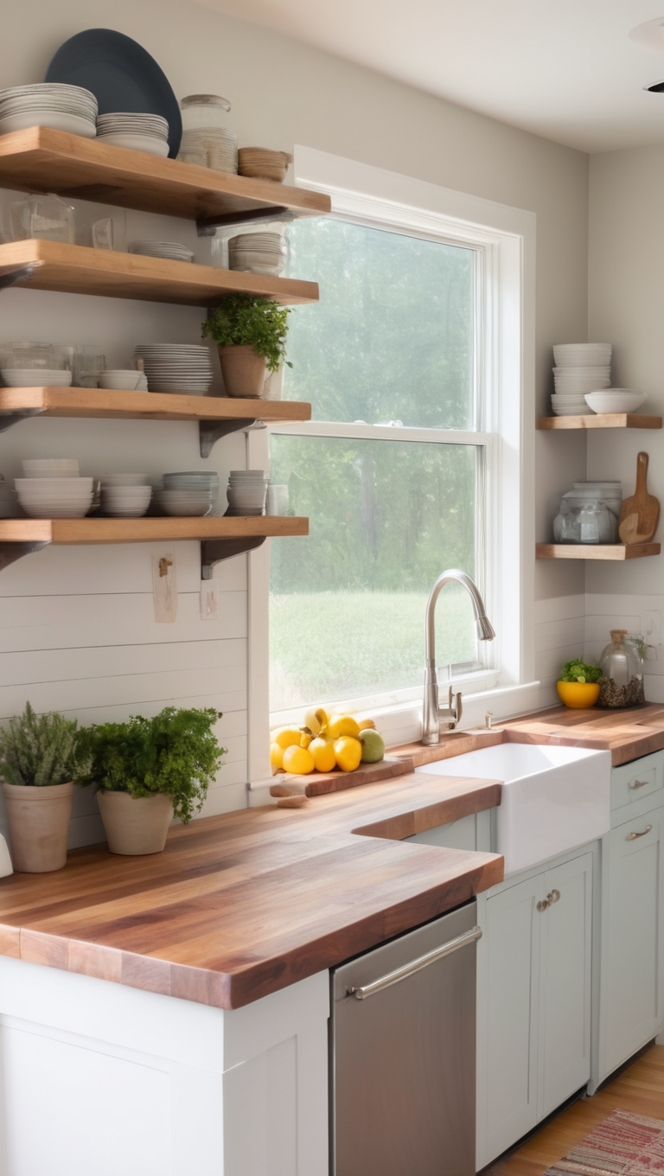

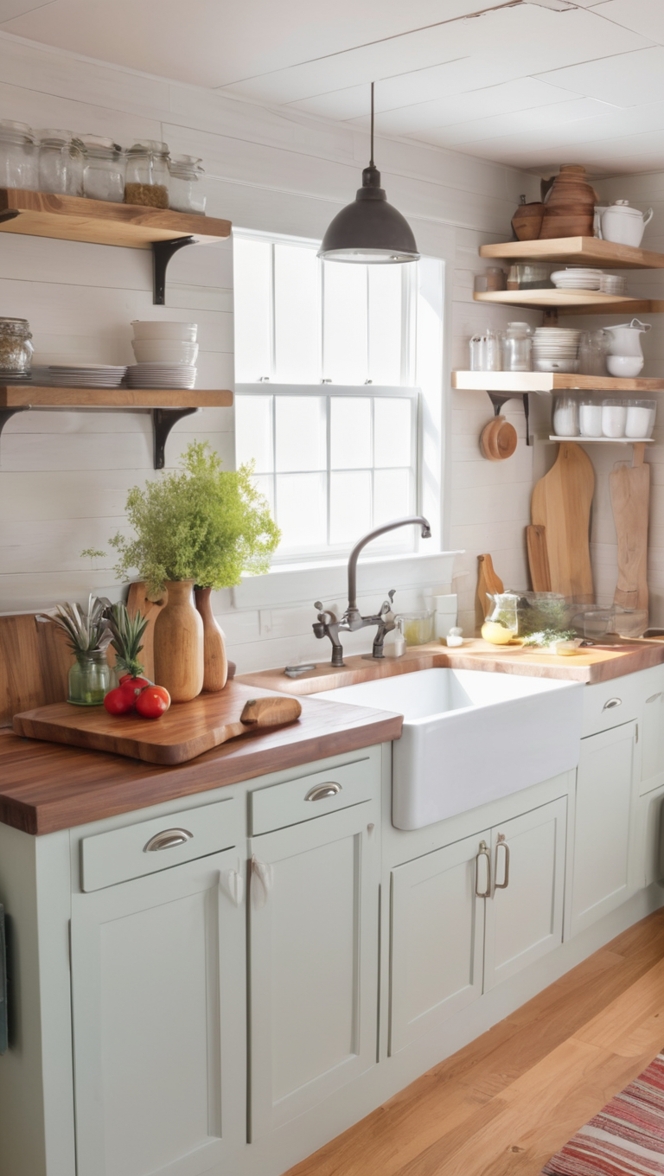
Create a Controversial-Style Article on Butcher Kitchen Block Ideas
Inspired by the concept of combining rustic elements with modern functionality, I transformed my butcher kitchen block into a practical yet stylish piece. Here are some unique ideas:
1. Bold Paint Colors:
Consider painting your butcher kitchen block in vibrant hues like Sherwin Williams’ “Salute” or Benjamin Moore’s “Hale Navy” to make a statement.
2. Industrial Chic:
Add metal accents like steel handles or brushed nickel hardware to give your kitchen block an industrial edge.
3. Natural Stone Countertop:
Upgrade your butcher block with a natural stone countertop like granite or quartz for a luxurious touch.
4. Multi-Functional Storage:
Incorporate pull-out drawers, spice racks, and built-in shelves to maximize storage space and functionality.
5. Vintage Charm:
Add vintage details such as brass knobs, antique hooks, or distressed finishes to create a charming and nostalgic look.
6. Integrated Appliances:
Install built-in appliances like a wine fridge, microwave, or dishwasher to streamline your kitchen block’s functionality.
7. Smart Technology:
Opt for smart features like USB charging ports, voice-activated controls, or touch-screen displays for a high-tech kitchen experience.
8. Sustainable Materials:
Choose eco-friendly materials like reclaimed wood, bamboo, or recycled glass to create a sustainable and environmentally-conscious butcher kitchen block.
By incorporating these innovative ideas, you can elevate your butcher kitchen block to a whole new level of style and functionality.